HomeBlog Is Universal Credit a Taxable Benefit? Taxable vs Non-Taxable Benefits Explained for UK Citizens
Is Universal Credit a Taxable Benefit? Taxable vs Non-Taxable Benefits Explained for UK Citizens

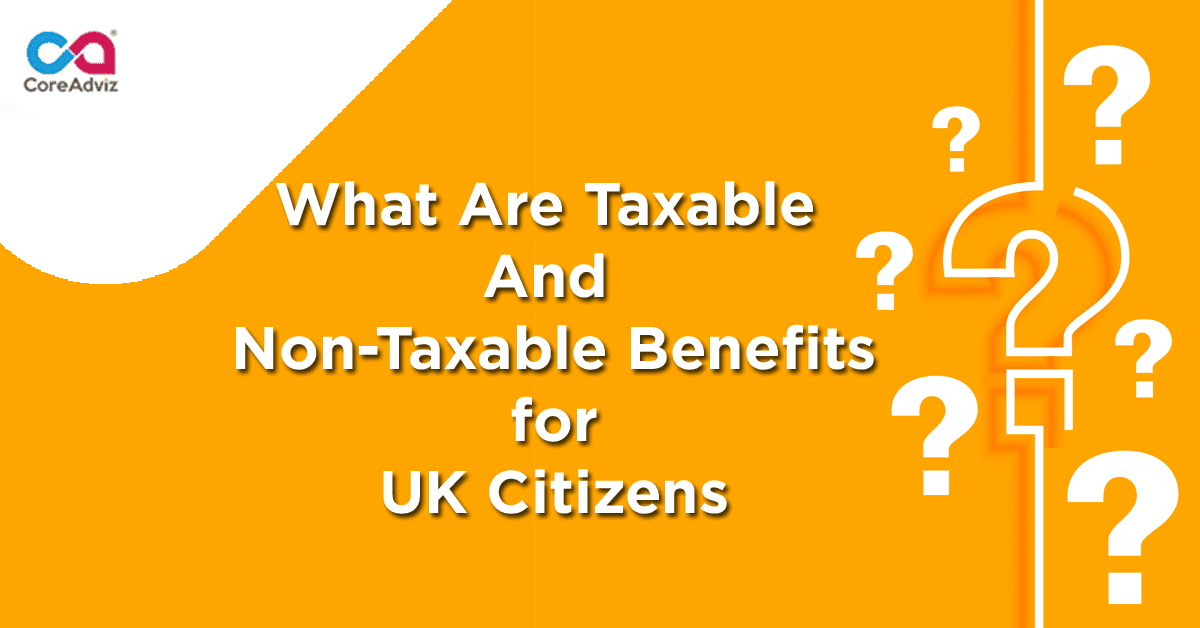
The UK benefits system can be confusing — especially when it comes to knowing which payments are taxable and which are not. A question we frequently hear at CoreAdviz is: “Is Universal Credit a taxable benefit?” The short answer is no — but the full picture is more nuanced. Below, we break down the key taxable and non-taxable benefits for UK citizens so you know exactly where you stand.
It is vital to note that the VAT is similar to the sales tax of the United States. Clearly, the UK tax system is complex, but citizens also get benefits that make life easier. It is significant for taxpayers to understand the benefits for which they need to pay taxes to the Government and those that are not taxable. So, let us dig deeper.
Common taxable benefits
Some of the common taxable benefits are as follows:
• Company Benefits-This includes multiple benefits offered by your company such as vehicle, accommodation, medical insurance, or loan.
• Widowed Parent Allowance (WPA)-Depending on the national insurance contributions made by your late wife, husband or civil partner, this allowance may vary significantly.
• State Pension-Currently, the basic rate is £141.85 per week. There is also a new state pension rate of £185.15 per week under some pre-conditions.
• Jobseeker’s Allowance (JSA)-You can get an allowance of up to £61.05 every two weeks up to 24 years of age. The allowance amount is then increased and can reach up to £77.00.
Some other notable taxable benefits are Short-Term and Long-term Incapacity Benefits, Industrial Injuries Disablement Benefits, Employment and Support Allowance, and Carer’s Allowance.
Is Universal Credit a Taxable Benefit?
This is one of the most commonly asked questions by UK claimants, and the answer is straightforward: Universal Credit is not a taxable benefit. HMRC does not treat Universal Credit payments as taxable income, which means you do not need to declare it on a Self Assessment tax return, and it will not reduce your Personal Allowance.
Universal Credit is a means-tested benefit that replaces six legacy benefits — including Working Tax Credit, Child Tax Credit, Housing Benefit, Income Support, Income-based Jobseeker’s Allowance, and Income-related Employment and Support Allowance. Since it is designed to support low-income households, HMRC exempts it from income tax entirely.
However, if you are self-employed and receiving Universal Credit, your earnings from self-employment are still taxable — only the UC payments themselves remain tax-free. If you are unsure how Universal Credit interacts with your overall tax position, speaking to a tax adviser in the UK is strongly recommended.
Common benefits that are non-taxable
The non-taxable benefits are as follows:
- Company benefits-These include canteen meals, mobile phone, workplace parking, annual health check-ups, and non-cash benefits.
- Armed Forces Independence Payment (AFIP)-Paid at a rate of £156.90 per week, this allowance is aimed at service personnel and veterans covered under the AFCS GIP scheme.
- Bereavement Support Payment (BSP)-In this non-taxable benefit, there are two monthly payment rates and those who have the Child Benefit become eligible to get the higher rate.
- Child Benefit-Here also, there are two different rates-weekly payment of £21.80 for the eldest or only child and £14.45 for any additional children.
- Guardian’s Allowance-You become eligible for this allowance if you are taking care of a child who has lost both of his parents or has only one surviving parent. Currently, it is a weekly payment of £18.55.
- Universal Credit – Not a taxable benefit. UC payments are fully exempt from income tax and do not need to be reported on a Self Assessment tax return. Claimants with self-employment income should note that their trading profits remain taxable, but UC top-ups are not.
Meanwhile, there are a lot of other benefits on which you are not required to pay taxes. Some of these are the Personal Independence Payment (PIP), Severe Disablement Allowance, War Widow’s Pension, Attendance Allowance, Maternity Allowance, Housing Benefit, Income Support, Winter Fuel Payments and Christmas Bonus, and more!
Here it must be noted that some Christmas parties and gifts are tax-free with some pre-conditions. It takes hours to navigate through taxable and non-taxable benefits. After all, it is not possible to remember all of them to claim tax relief. So, it is high time that you must seek professional help for guidance. There is no shortage of accountants and tax consultants in UK who can provide you with much-needed assistance.
Based in the UK, CoreAdviz is a renowned accounting firm with a talented and experienced team of accountants. With its expertise in serving a vast clientele in and around London, the firm is deeply committed to meeting the accounting needs of individuals and businesses at an affordable fee. Moreover, by hiring such accountants, you can also have quick access to accounting software and knowledge of various tips to reduce your overall tax liabilities.
No. Universal Credit is not counted as taxable income by HMRC. It does not need to be declared on a tax return.
Universal Credit itself does not change your tax code. However, if you also have employment income, HMRC may adjust your tax code separately based on your earnings.
Taxable benefits include the State Pension, Carer’s Allowance, Jobseeker’s Allowance, and Employment and Support Allowance. Universal Credit, PIP, Housing Benefit and Child Benefit are generally not taxable.
Yes. Self-employed individuals can claim Universal Credit, but their trading profits are still subject to income tax and National Insurance. The UC payments themselves remain tax-free.