HomeBlog Do I Need to File a UK Tax Return if I’m Not Self-Employed?
Do I Need to File a UK Tax Return if I’m Not Self-Employed?

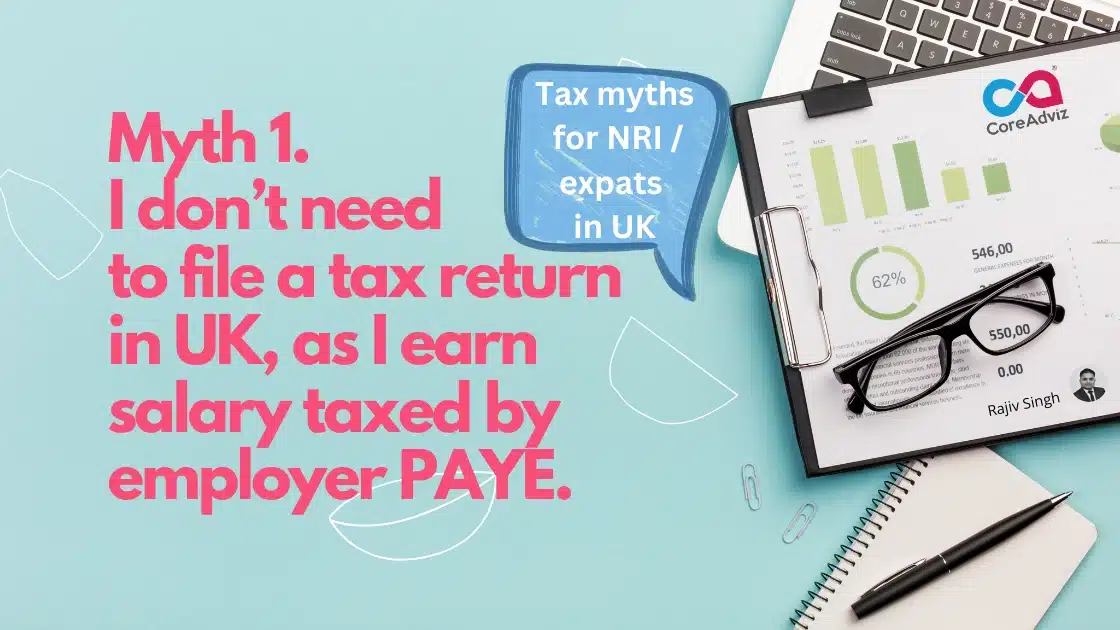
Many individuals in the UK assume they don’t need to submit a tax return because they are not self-employed, working full-time or part-time at their employer and salary is already taxed (deducted) through payroll via PAYE every month. While this is true in most cases if you are looking only at one sided aspect. But this is not always correct.
Even if you are not self-employed, you may still need to file a Self Assessment tax return depending on your other circumstances such as; income sources, tax position, refund claim or residency circumstances.
This article explains when an individual employee must file a UK tax return, especially if you are an expat or have overseas income.
Do PAYE Employees Need to File a UK Tax Return?
If your only income is an employment income taxed through payroll via PAYE, and your tax affairs are straightforward, you usually do not need to file a tax return.
However, many individuals employees still fall within Self Assessment requirements because they have:
- foreign income
- rental income
- investment income
- Interest income from deposit
- capital gains
- high earnings
- Pension tax charge
- High tax income child benefit charge
- Received overseas pension or provident fund
- Claim employment /job expenses claim over £2500 in a tax year
- Residency or FIG – related tax claims
This is particularly common among international professionals living in the UK.
9 Common Cases When You Must File a Tax Return Even if Not Self-Employed
Below are the most common circumstances where an individual employee is required to submit a UK tax return.
1. You Have Foreign Income
This is one of the biggest reasons employees must file a Self Assessment return in the UK, even if a tax return is filed overseas. You may be able to claim relief of foreign tax paid under a double tax agreement between various countries.
Foreign income includes:
- interest from overseas savings accounts such as NRE / NRO bank account in India
- fixed deposits held outside the UK
- dividend income from foreign shares or mutual funds
- rental income from overseas property
- overseas pension income also called as PF or provident fund
- capital gains from selling foreign assets
If you are a UK tax resident, you may need to report your worldwide income unless special rules apply.
Many expats incorrectly assume overseas income or gain does not need to be declared if it stays abroad. In reality, reporting requirements often still apply even if they have never remitted..
2. Recently Moved to the UK and Qualify for the Foreign Income & Gains (FIG) Regime
If you moved to the UK recently and were non-resident for the previous ten (10) tax years, you may qualify for the Foreign Income & Gains (FIG) regime.
This regime can allow you to:
- avoid UK tax on foreign income and gains (for a limited period up to 4 years)
However:
- you must claim this regime option each tax year through Self Assessment
- you lose your personal tax-free allowance
- careful cost-benefit comparison is essential before choosing this option
Because the claim is made through a tax return, filing is required even if you are employed under PAYE.
3. Private Pension Contribution And Total Pension Exceeds Annual Allowances
If you have either paid a contribution to a private pension, overseas qualified pension or any employer pension fund; out of net salary (after tax is deducted from gross earnings). Then you must file a self-assessment tax return..
Employees with higher earnings usually contribute to a pension fund to minimise overall tax impact but that sometimes exceed annual allowances currently up to £60,000 and any unused allowance from three years ago. They are often required to file a tax return and pay additional pension charge tax calculated even if PAYE tax is deducted through PAYE.
A tax return helps confirm:
- personal allowance adjustments
- pension contribution relief and excess allowances
- additional tax liabilities
- other income disclosures
High-income individuals can frequently benefit from reviewing their tax position annually via self assessment.
4. You Receive Rental Income from Property
If you are letting one of your furnished rooms within your house to a lodger or a paying guest and earn up to maximum £7,500 in a tax year (2025/26), then rental income is tax-free. Rest all other cases if you are receiving rental income from property, you normally need to submit a tax return.
This includes:
- UK property rental income
- Furnished holiday home
- overseas property rental income
Even if:
- the property is jointly owned
- a mortgage exists to pay out monthly total out of rent
- profits are lowest or none
- Tax is already paid overseas (able to claim FTCR in the UK).
Rental income must be reported through Self Assessment in the UK.
5. You Receive Dividend and Interest Income Above the Allowance
Dividend and income from savings may create a tax return filing obligation if it exceeds the annual allowance. The following allowance is set as exemption for the current tax year (2025/26):
- Dividend allowance is up to £500 a year.
- Starting rate income from savings allowance is up to £5,000 a year if total gross including other income is less than £17,570 in a year.
- Personal saving income allowance
- £1,000 a year if your income tax band is under basic rate
- £500 a year if your income tax band is under higher rate
- £0 a year if your total income tax band is under additional rate payer
You may be able to update your untaxed investment income including dividend and interest from savings bank (excluding ISA) and pay tax to HMRC, if they are total under £10,000 in a tax year via a personal tax account in a simple online form using HMRC gateway portal or a HMRC mobile app. However, you need to update this every year. In all other cases, you should be better filing self-assessment tax return in UK:
Common examples include:
- dividends from personal investments
- overseas shareholdings
- mutual fund distributions
- company dividends received by directors
Dividend taxation rules change regularly, so reviewing your position each year is important.
6. You Have Sold Capital Assets and Gains/Loss to Report
You normally need to file a tax return
- if you dispose of assets and make gains above the annual exemption, or
- If you have sold any capital assets overseas, or
- If you made a switching assets account (from A to B), or
- In case there is a loss and you like to offset with other capital gain during the year or carry forward.
Typical examples include selling:
- Shares and securities
- overseas property
- second homes
- business assets
- cryptocurrency
Even if tax has already been deducted elsewhere, reporting requirements still apply in the UK.
Practical Tip: If you have sold a capital asset overseas and made a loss, it is better practice you should report this into the UK tax return, so that it is documented in audit trail of any capital amount you may be remitting to the UK in future or offsetting with future gains.
7. HMRC Asked You to File a Tax Return
If HMRC sends a notice to file, you must submit a tax return.
This applies even if:
- your tax is already deducted through PAYE
- you believe no additional tax is due
- your income is straightforward
Ignoring a notice to file can lead to penalties.
8. You Are Claiming Certain Tax Reliefs
An individual employee sometime need to file a return when claiming specific reliefs such as:
- higher-rate pension contribution relief
- Gift Aid tax relief adjustments
- Business Investment Relief
- Overseas Workday Relief
- Foreign Income & Gains regime claims
- Temporary workplace relief (TWR) maximum up to 24 months includes accommodation, travel, food and essential bills.
- Time Apportion Relief (TAR) on various income and gain
- Job expenses such as; working from home, Uniform, working clothes, mileage claim, travel including overnight expenses, professional fees, subscription, tools and equipment that are not reimbursed by employer.
Submitting a tax return ensures these claims are correctly processed.
9. Any Other Income inclusive list
You must be filing tax return in UK if following cases of other income applies to you
- Income from a trust
- Income from Overseas Pension including provident fund and similar name
- Untaxed income or remuneration from a company as director
- Hold certain position – working as religious minister or Lloyd’s underwriter or examiner, exam moderator or invigilator or share fisherman
- Any other income over £2500*.
Note *: If you have any other income (including casual , out of pocket or freelancing) between £1000 to £2,500, you can usually update via a personal tax account at HMRC gateway portal or mobile app and pay tax.
Frequently Asked Questions
Expats from overseas working in the UK, are mainly business owners, skilled workers or immigrants who come here to perform job / business project assignments including on a mobility or intra-company transfer or highly skilled worker or a global entrepreneur visa..
Expats as soon as they become tax resident in the UK following statutory residency test (SRT), and earning salary; need a tax return in the UK.
You may need to file if you:
– hold savings or investments outside the UK
– receive overseas rental income
– earn dividends from foreign mutual funds
– transfer funds internationally – segregating clean and mixed fund
– recently became UK resident
– qualify for the FIG regime
Many internationally connected individuals assume PAYE employment removes filing obligations. However, residency-based taxation rules often make reporting necessary.
This is one of the most common misunderstandings.
If you are UK tax resident, foreign income may still need to be declared even if:
– the money remains overseas, or
– it is reinvested abroad, or
– it is not transferred to the UK.
An exception may apply if you qualify for the Foreign Income & Gains regime, but this must be claimed properly through Self Assessment.
You are more likely to need a UK tax return if you answer YES to any of the following:
– I have savings or investments outside the UK
– I receive rental income (UK or overseas)
– I moved to the UK recently as expat working on job assignment
– I earn dividend income from shares or mutual funds
– I sold assets such as property or shares
– HMRC contacted me about Self Assessment
– I want to claim the Foreign Income & Gains (FIG) regime.
If any of these apply, reviewing your position early helps avoid penalties.
Key deadlines include:
– 5 October
Register for Self Assessment (if required).
– 31 January
Submit your online tax return.
– 31 January
Pay any tax due
Late filing penalties apply automatically once deadlines are missed.
Failing to submit a required tax return can result in:
– late filing penalties,
– interest on unpaid tax,
– additional compliance checks from HMRC.
In many cases, employees only realise they should have filed after receiving a notice from HMRC. Checking your obligation early reduces risk.
If you:
– are working in the UK under PAYE
– recently moved to the UK
– hold overseas investments
– receive foreign rental income or any other income/gain
– or may qualify for the Foreign Income & Gains regime
It is worth reviewing with a tax advisor in UK whether Self Assessment applies to you.
CoreAdviz Accountants supports expats, internationally connected professionals, and employees with overseas income to stay compliant and tax-efficient in the UK.
If you’re unsure whether you need to file a tax return, getting clarity early can prevent penalties and help optimize your tax position.