HomeBlog The Benefits of Cloud Accounting For Small Businesses
The Benefits of Cloud Accounting For Small Businesses

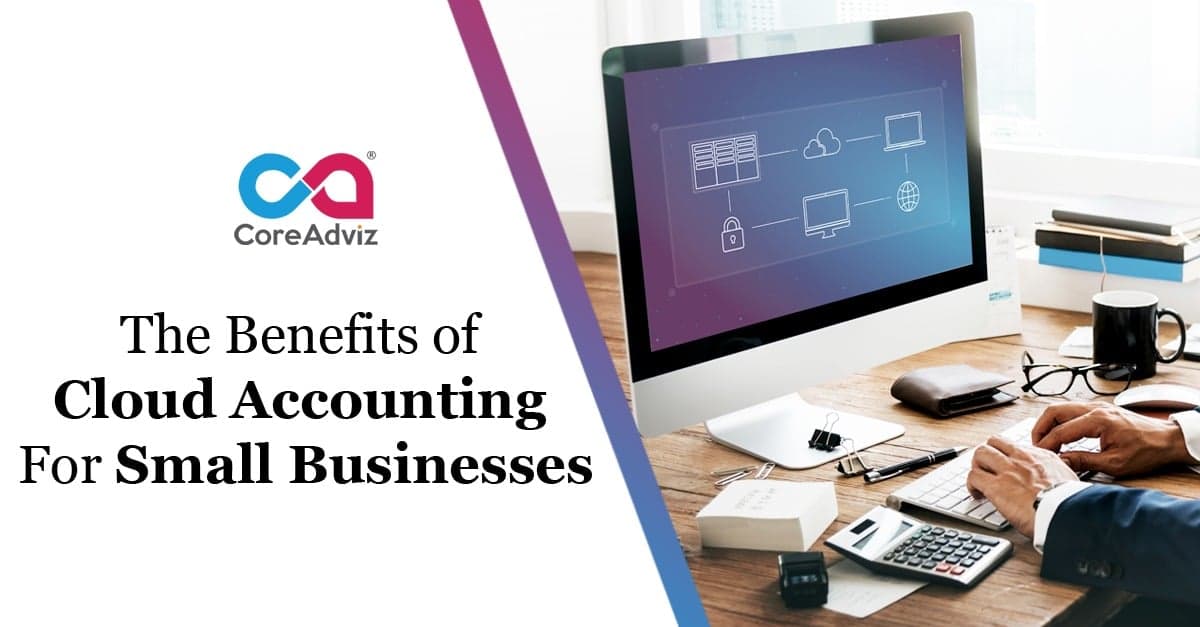
In recent times, cloud technology has changed numerous facets of business operations, and accounting is one among these. Cloud accounting i.e. accounting software hosted on remote server offers various advantages over traditional accounting to businesses, especially to small businesses. Indeed, there is tremendous growth in the demand for cloud accounting. So, if you run a small business, let’s explore the top five benefits of cloud accounting for small businesses.
Accessibility from Anywhere
Gone are the days of reliance on paper-based systems. Also post-COVID, there has been a substantial increase in the number of employees willing to work remotely. In such a scenario, the traditional accounting system does not let you access your financial data from anywhere, but cloud accounting offers this accessibility. So, with the help of an internet connection, you can easily access, view and monitor your financial reports to make informed decisions without any delay. Whether you have to send invoices or be on the same page with your teammates regarding the financial health of your business, everything is possible irrespective of your physical location.
A Cost-Effective Solution
Maintaining a positive cash flow is always a big concern for small businesses. Adopting cloud accounting means avoiding upfront investments in IT infrastructure, software licenses, and hardware, and you need to pay only for the services you are availing. Also, in cloud accounting, there is zero maintenance cost and other associated expenses, which means it is a cost-effective solution compared to traditional accounting. The icing on the cake is that you don’t have to manually update your accounting software as it will be done by your provider to ensure accounting accuracy.
Increase Collaboration
In a post-COVID world, more and more small businesses prefer remote work arrangements to significantly cut their expenses related to office rent, office supplies, maintenance, etc. However, this means a challenge regarding collaboration between their employees and team members. Cloud accounting platforms have collaboration features that facilitate multiple users to access financial data. They can also work on it as and when required. This collaborative environment offers enhanced communication between the business owner, accountant and other stakeholders. Moreover, cloud accounting software seamlessly integrates with your CRM and ERP systems leading to better data synchronization.
Enhanced Data Security
Be it a small business or a large enterprise, data security is a top concern amidst increasing incidents related to data theft and unauthorized access. Cloud accounting means you can remain stress-free as most of the cloud accounting platforms comes with built-in robust security measures like encrypted transmission, regular system backups, and so on to prevent any loss or theft of your valuable financial data. Furthermore, when you’re adopting cloud accounting, you have fewer chances of getting entangled in legal complications that may arise due to failure to comply with various data protection laws.
Much-Needed Scalability
It is a fact that small businesses that demonstrate scalability have better chances of attracting investors. In near future, you may develop the desire to expand your operations under favorable market conditions. In such a scenario, your accounting needs will also evolve. Saying a ‘yes’ to cloud accounting means having the much-needed scalability to scale your accounting processes as per your business growth.
In short, cloud accounting is a game-changer for small businesses and gives them a competitive edge in a growing digital landscape. It is high time to leverage its power to reap its benefits.