HomeBlog Taxation for Employees Working Abroad
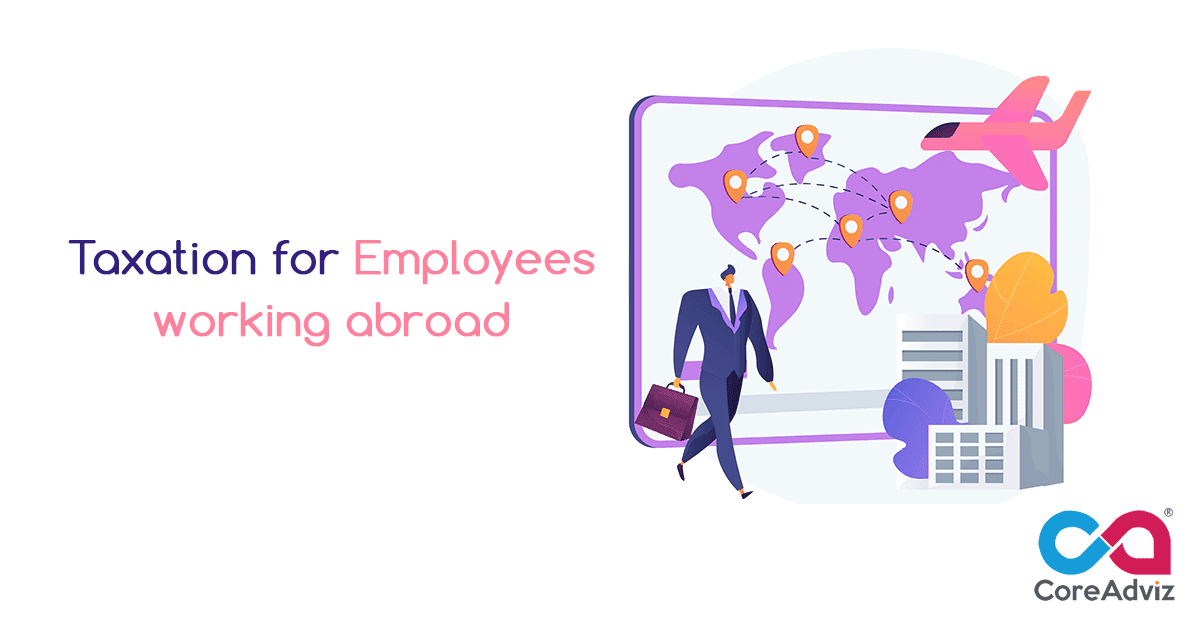
Taxation for Employees Working Abroad

If you are reading this then I will probably assume that you were a resident of UK, but your current source of income/ employment is with some other nation. Questions like “how much do I pay to the UK Government as tax?”, “I have already paid taxes to the country where my income was generated, do I need to pay double tax?” will continue to occupy your thoughts. So, here is an overview that will help you understand the taxation policies better.
Employee can be working abroad (outside UK) in mostly for two scenarios:
- You are resident of UK, employed by Employer based in UK and now started working in overseas country as an expat
- You are hired as an overseas employment contract but resident of foreign country (have never been resident of UK)
Key dependency factor to determine taxability is the number days count you have stayed abroad.
A person who uses to beresident in UKand whose source of income is now from another country, you’ll be required to pay tax in UK on overseas salary as worldwide income. You may be able to claim full UK tax relief via form P85 sending to HMRC for confirmation of the tax code,if your period of overseas stay is for 1 year or more.
However, there are two conditions that needs to be fulfilled, as your status will change to ‘non-resident’ of UK for that period:
- Tax for whole year: As an employee who works abroad, your duration in other country should last for at least one tax year, that is from 6th April to 5th April.
- Duration of visits to UK: Compelling someone to remain in a foreign land for a year sounds unfair. This is why the UK Government allows such people to visit UK for a maximum of 182 days (for the 1st year). Cases where such type of employment has been going on for more than a year, the average number of days should be less than 91 days per tax year.
You also have to pay Tax on income in foreign country while working overseas regardless of salary credited in your UK bank account or in foreign country because of number of days stay had been exceeded to be ‘Non-resident’ as per requirement of foreign country laws.
In case of person is hired as an overseas contract for long term. It is clearly evident that your income is not originating in the UK, hence your statuswould be changed to“non-resident” in UK. You must follow the respective law of country for taxation requirement and your overseas employment contract would guide you in case tax is deducted at source.
When Do I need to Pay PAYE Tax?
PAYE (Pay As You Earn) tax is deducted from all employees of UK working abroad. It is calculated based on available documents such as date of starting your abroad journey, gross pay between starting of tax year and the date you went abroad as well as tax deduction between starting of tax year and date you went abroad. However, refer above para in some case you can claim full relief.
Impact on National Insurance
As a citizen of the UK, you are also required to contribute towards National Insurance, either by yourself or via your employer. If you were working and living in UK before shifting to abroad, you are required to contribute towards the national insurance for a period of 52 weeks in your stay in abroad. Therefore, as a UK citizen working abroad, you will be required to pay the class-1 NICs for a period of weeks. After this period, you can continue paying the National Insurance as class-2 contributions.
Special Agreement
UK has established several special agreements with European Nation and other countries with reciprocal agreement which targets and individual’s social security contribution between UK & the nation where you are working. In case you are travelling to a country having reciprocal arrangement with UK, two different forms are required to be filled- CA3821 ad CA3822
Unlike what it looks like, continuously contributing towards the national tax policy as well as national insurance policy will ensure that your health and social rights such as pension are secured.
Disclaimer: This above article is just for general information purpose, should not be treated as consulting advice. Indeed, there are more complex cases on this above topic and you should consult tax advisor to deal with personal advice, as suggestive approach could be changed with person to person for right tax planning.
In case you have questions or doubts regarding your taxation status, feel free to reach out to us.