HomeBlog Tax-Efficient Exit Strategies for UK Entrepreneurs and Business Owners
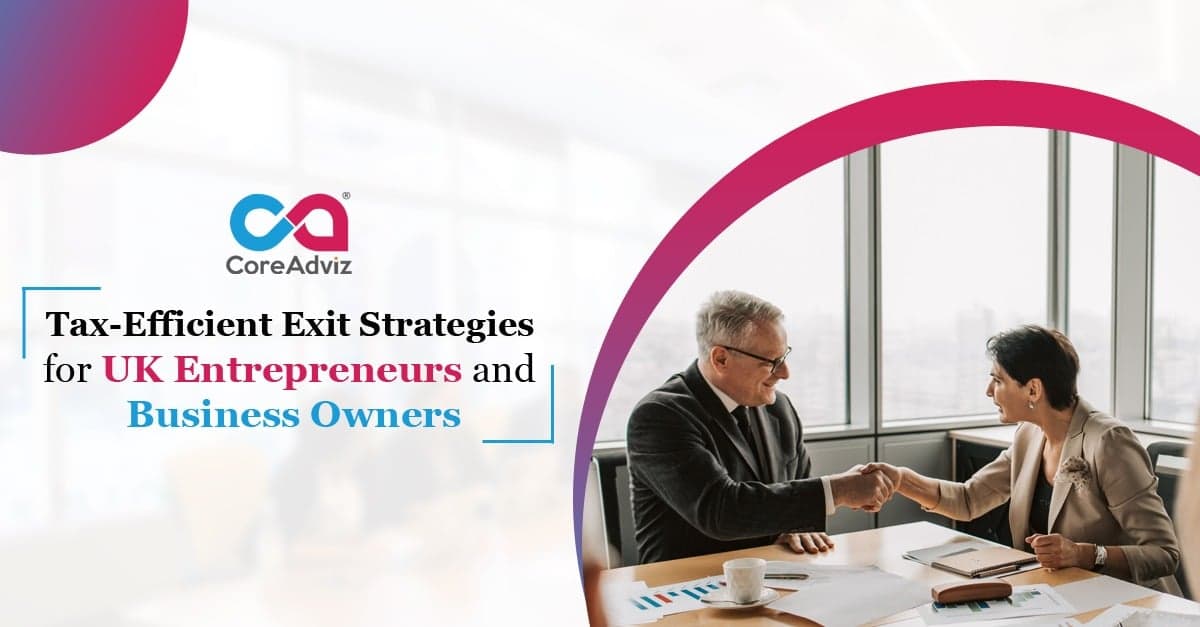
Tax-Efficient Exit Strategies for UK Entrepreneurs and Business Owners

The world of entrepreneurship is uncertain. There can be exciting highs and daunting lows. As a UK-based entrepreneur or business owner, you have probably worked hard to build your business. So, to exit the same, seems unimaginable! Yet, due to declining profitability, severe health issues, or sometimes to pursue new ventures, you may too have to exit your business one day. So, it makes a lot of sense to explore some tax-efficient tax strategies to have confidence during this tough decision.
Selling Your Business
This can be a good exit strategy, but understanding the tax implications is essential. Remember, it is never straightforward. You must have a proper valuation before its sale to enter into a negotiation with confidence. However, the Capital Gains Tax (CGT) will be inevitable. You have to pay CGT on the profit that you are going to make with this sale. It is typically 20% depending on various factors for higher rate tax payers. However, you can get some relief. Under the Business Asset Disposal Relief (BADR), you must pay only 10% CGT rate on your qualifying business assets up to a lifetime limit of £1 million. You have to plan your exit in advance to meet the BADR criteria.
Succession Planning
Preserving you family legacy can be great idea, especially when you have put your blood and sweat to establish a business. Meanwhile, this also means your business will prosper under an able leadership even after your successful exit. Again, transferring your business to your children or other family members has its own tax advantages. If you plan well in advance, you can carefully pass your business to your family member without incurring charges to CGT or inheritance tax. In the UK, there is a provision of Business Property Relief (BPR) that can offer you 50%-100% relief from inheritance tax. However, it is highly advisable to seek guidance from a professional to efficiently structure your business transfer.
Employee Ownership Trust (EOT)
An Employee Ownership Trust (EOT) is a unique exit strategy. In this case, when you sell your business to an EOT, you can have significant tax benefits. An EOT is an employee ownership business model which is established for the benefit of employees. If you are able to structure this properly, an EOT sale can offer CGT rate of zero per cent for the selling shareholders, but this is only if an EOPT has more than 50 % controlling interest in the business.
Liquidating Your Business
This is always the last resort for an entrepreneur, especially when nothing else seems to work. If you have a small business, liquidating the same can be an excellent tax efficient exit strategy. However, for an owner of large company, Members’ Voluntary Liquidation (MVL) works best. In such a scenario, you need to make a formal declaration of solvency and ensure that your business has enough assets to clear all debts (if any). In an MVL, if there are any remaining assets after clearing all the debts, they get distributed to the shareholders. This is then looked upon as a capital gain and let you enjoy a lower tax liability.
As deciding the right exit strategy is a significant step, you must plan carefully and think regarding the possible tax implications. Remember, tax laws can evolve with time. So, consult a skilled accountant or tax advisor before making a decision.