HomeBlog Know About All the Changes to VAT Penalties and Interest
Know About All the Changes to VAT Penalties and Interest

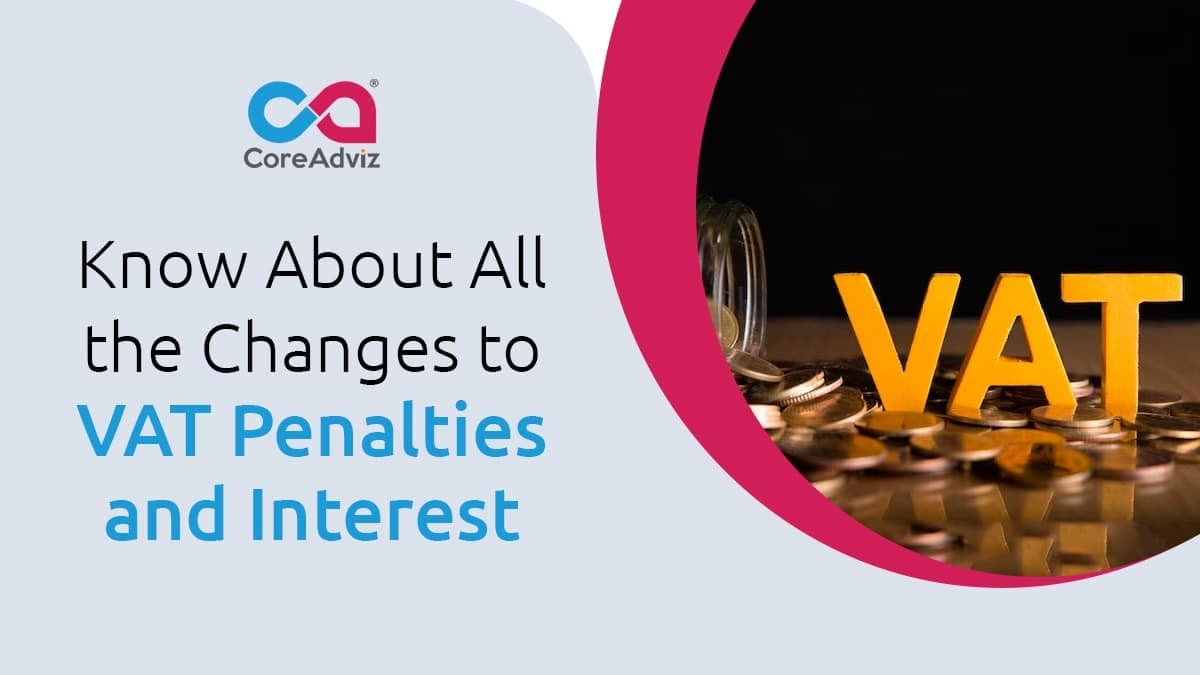
Introduced on 1 April 1973, Value Added Tax (VAT) is a consumption tax levied on the sales of goods. At that time, it meant to replace the purchase tax. You may already know that it is mandatory for businesses that are registered for VAT to submit their VAT returns, and failing to do the same invites penalties. However, there have been recent changes to VAT penalties and interest from 1 January 2023. In this blog, we are going to discuss all these changes.
New points-based system
From 1 January 2023, whenever you are late for your VAT return submission, you will get a penalty point for late submission. Once you reach the threshold of penalty points, you must pay a £200 penalty. Now, you may be thinking about the threshold for penalty points. Well, there are three thresholds for penalty points based on the accounting period.
For example, if your accounting period is annual, the penalty point threshold is two, but if it is quarterly, the penalty point threshold will be four. This implies that if you pay your VAT returns after every three months, you can afford a delay in VAT return submission for up to four times maximum, and after that, there will be a penalty of £200, but this is not the end! If you do not mend your habit of late VAT returns, there will be again a £200 penalty.
Now, some people follow a non-standard accounting period as per their agreement with the HMRC. In such a case, the penalty point threshold will differ according to the accounting period. For example, if the accounting period is more than 20 weeks, the penalty point threshold will be two, and if it is more than 8 weeks and up to 20 weeks, the penalty point threshold will be four. Similarly, if it is 8 weeks or even less, the threshold will be five.
Removal of all penalty points
If you have already reached the threshold, there is a provision to remove all the penalty points. For the same, you need to meet two conditions. First, you have to ensure that you will now submit all your VAT returns by the due deadline for a period of compliance. The second condition is that you have to clear all your outstanding dues for the last 24 months. To get help for the same, you can take the help of an experienced accountant. You can also use any accounting software compatible with the Make Tax Digital initiative of the UK government.
Changes in interest charged on late VAT payments
From 1 January 2023, the HMRC has decided that late VAT payment interest will be charged from the first day of payments overdue until they are paid fully. At present, it depends on the base rate of the Bank of England. Now, as the Bank of England is increasing its base rate from 4.25% to 4.5%, there is no doubt that you will have to pay a higher interest rate on your late VAT payments.
If you run a business, it is essential to be aware of these changes to avoid incurring penalties. Also, it makes sense to submit your VAT return on time and develop a good understanding of the new point-based system. HMRC even support VAT-registered businesses to set up a payment plan to pay in instalments. Still, if you think all of this is complex, it is better to consult a seasoned accountant before making any move.