HomeBlog Interest Rate Cut – How It Affects Business
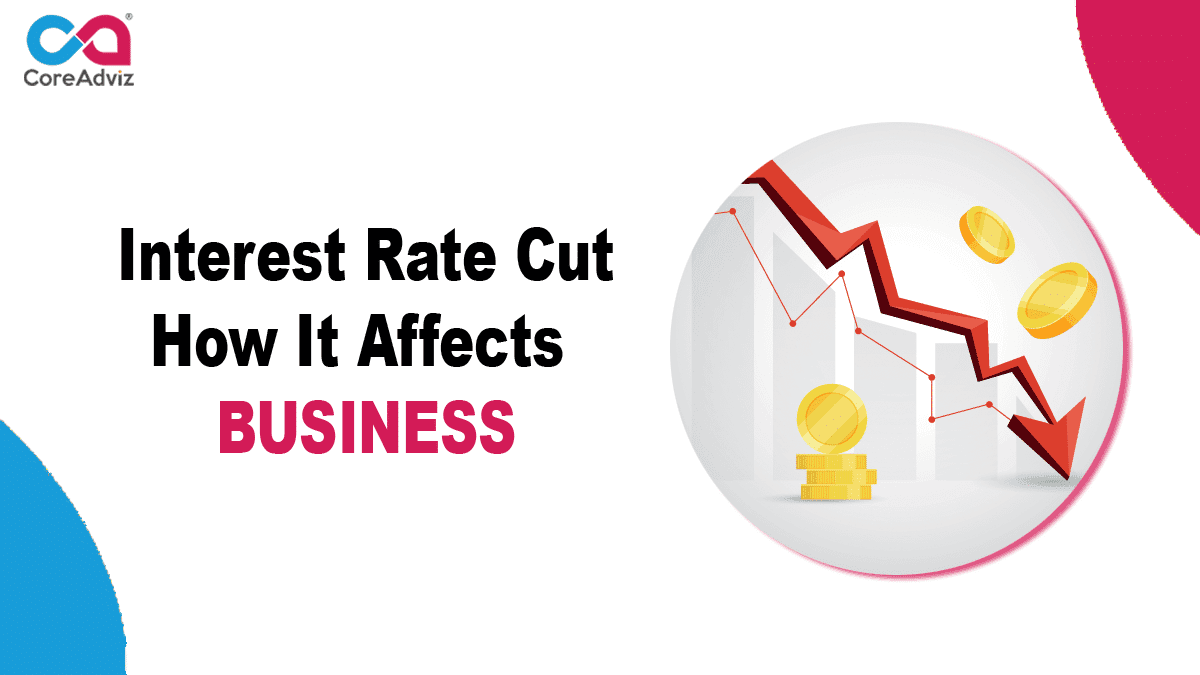
Interest Rate Cut – How It Affects Business

Recently the Bank of England reduced its interest rates from 5.25% to 5% in a significant move. The last such move was way back in 2020 for countering the severe impact of the pandemic on the UK’s economy. So, if you are an entrepreneur thinking about the impact of the recent interest rate cut on your business, remember that such measures are often viewed as a double-edged sword. So, let’s dig deeper and understand that when the interest rates are low, it is cheaper for businesses to take out loans.
Lower Borrowing Costs
Are you thinking of applying for a business loan to finance the purchase of some new machinery or to invest in an innovative technology? There is good news! Lower interest rate means lower borrowing costs. So, it will be now easier for you to manage the repayments of your business loan.
Let’s understand this with an example-
Amount of business loan = £100,000
Term of repayment of loan =5 years
Earlier interest rate=5.25%
Present interest rate =5% (After cut in interest rate)
So, if you calculate, you will find that your business will now make a monthly repayment of £1,887.12 instead of a monthly repayment of £1,898.60.
Improved Cash Flow
When the monthly loan repayments are less, it directly translates to an improved cash flow. You will now have more funds available for your marketing activities or operational expenses. This also ultimately helps you to create an emergency pot for your business so that you can meet unexpected costs and not fall into a debt trap. An improved cash flow means more power to you as an entrepreneur towards strategic decision-making.
Increased Consumer Spending
A reduction in the interest rate aids in increased consumer spending because now he will have more money left after loan repayments. In such a scenario, it is obvious that he will be more inclined to spend his money on some goods and services. When an entrepreneur does the same, he makes sure that every single penny he is spending is going to benefit his business in the long run. Moreover, increased customer spending also helps in boosting the overall sales.
Competitive Advantage
There is an interesting thing that resulted due to an interest rate cut as in such a case; you can have an advantage for your business! This is by offering your goods or services at a competitive pricing which will give your business an edge over your existing and potential competitors.
Investment Opportunities
When interest rates are low, you can think of making the most of investment opportunities to grow your business further. This can be strategic investments in R&D, staff training or even a new acquisition!
While a cut in interest rates has a range of positive impacts on a business, there is always a possibility of some negative impact.
An interest rate cut means you will now get less return on your bank savings. This can be significant for businesses that rely heavily on their bank savings for cash reserve creation. This is also a risk that you will be tempted to take more debt from banks for the sake of your business. Such a move can backfire if there is an over-dependence on debt funds and the bank increases the interest rates. Moreover, a cut in interest rate can also mean a weak currency which could put your business into a tight spot if it caters to an international market.
Clearly, the positive impacts outnumber the negative ones, but you need to be cautious before making any business decision. If you still have doubts, contact an experienced accountant or tax consultant to clear your doubts. Many professionals can give you the right advice, and you need to take the best course of action for your business.