HomeBlog How Changes in MTD Affects Your Business
How Changes in MTD Affects Your Business

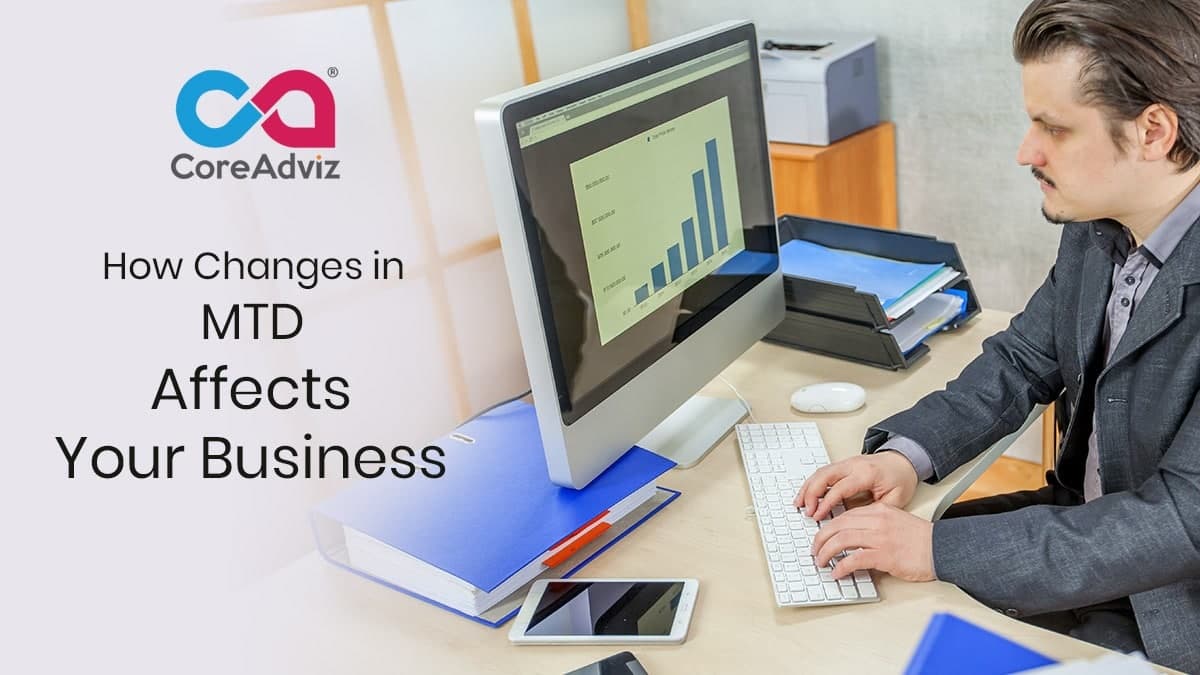
The world is progressing towards digital advancements every day. Making Tax Digital (MTD) is another such initiative taken by the UK Government. This is a fantastic opportunity for companies and businesses operating within the UK to review and update their accountancy processes. MTD is a scheme introduced by the British Government to move all business tax payments to an online mode. This scheme aims to turn HMRC into a highly advanced tax administrator.
Importance of this scheme
There are some valuable advantages for small businesses operating within the UK with the MTD scheme:
- More efficient business taxation
- Reduction in the occurrence of tax errors
- The UK government that this scheme can generate revenues estimated at around £610 million between 2020 and 2021.
MTD for VAT
Previously, UK businesses with average turnovers above the threshold for VAT were required to file and record their VAT returns through online software. With the MTD scheme in full swing, all VAT-registered businesses (including those with turnovers below the VAT registration threshold) need to record as well as file their VAT returns online from April 2022.
MTD for income tax and corporation tax
For income tax, remember the following pointers:
- MTD for ITSA (Income Tax Self-Assessment) has been delayed till April 6, 2024.
- MTD for ITSA applies to trusts, individuals, and partnerships with total property income or business income (gross turnover or income) over £10,000 per year.
- MTD for unincorporated businesses and general partnerships have been delayed till April 2024 and 2025 respectively.
For corporation tax, remember the following pointers:
- This scheme for corporation tax is still in its consultation period.
- The implementation of this scheme has been delayed till 2026.
What are the changes brought up by the MTD for the VAT scheme?
The main changes associated with MTD have been listed as follows:
- As a business operating within the UK, you may already be using software for your VAT returns. But now, you need to ensure that the software you’re using must communicate with the Application Programming Interface (API) of HMRC.
- The software must also uphold the higher security standards along with being HMRC’s API compatible.
Impact of the MTD scheme on your business
The impact of the Making Tax Digital scheme has been listed as follows:
- New requirements for maintaining digital records
As a business operating within the UK, you must use functional compatible software for your records and accounts. However, you don’t have to use this software for carrying out all functions like recording and preserving the digital records, conveying information as well as the data returns to HMRC.
Another important aspect of this change is that records and accounts once entered into functional compatible software must stay that way. However, the British Government will allow businesses a soft-landing period for implementing these changes.
- New requirements for digital links
All information and data transfer between apps, services or software programs should be in digital form if the data or information constitutes a part of your company’s digital records. Such data or information can only be modified or transferred digitally. These changes or modifications have to be linked to display the digital journey of the same.
Examples of digital links are:
- A CSV or XML import
- Automated data transfers
- API transfers
- Sending spreadsheets via email to tax agents so that the data can be imported to their software.
- Data transfer to portable devices and providing such devices to tax agents.
- Submission of VAT information to HMRC
All VAT information has to be submitted using an API to the HMRC. However, there are alternatives to API that you may use. Bridging software and API-enabled spreadsheets are two such alternatives.
- A list of the VAT records that have to be digitally stored
The list of designatory data that has to be stored digitally include:
- Name of the business
- Your business address
- VAT registration number of your business
- VAT accounting schemes used by your business
Other information that has to be stored digitally include:
- The time of supply
- VAT rate charged by your business
- Value of supply (net value, excluding VAT)
The aforementioned lists are only applicable to VAT-liable commodities. The lists are also applicable to supplies received. If the invoice contains more than one supply, you can easily record the totals. If your business uses a third-party agent for supplying your commodities, then this list applies to that as well.
- Other data recording requirements
Summary data must also be recorded as a part of every VAT return submitted to the HMRC. This includes digital records of the total tax of your company regarding the following:
- Owes on sales
- Owes on acquisitions from other countries in the EU
- The tax required to be paid for your suppliers under reverse charge procedure
- The tax required to be reclaimed or paid following an adjustment or correction.
- Other adjustments required or allowed by VAT rules (the total of every adjustment should be recorded on separate lines in the software system).
Simply put, businesses operating in the UK have to work on how digital records are created, shared, and stored.
At CoreAdviz, we can seamlessly support MTD for your company. With our team of qualified accountants and our cloud accounting system, we ensure that all your digital tax records are meticulously maintained.